7 Best Online Mindset Coaches in 2026
You have read the books, listened to the podcasts, and still catch yourself running the same loop that keeps you stuck. That gap between knowing better and actually doing better is what sends most people hunting for a coach who can reach the part of the mind that logic never touches.
This article breaks down what to look for in an online mindset coach in 2026, then reviews seven options, from Eli Bowman's 75Mind program to Dr. Joe Dispenza and Marisa Peer, so you can compare methods and pricing and pick the right fit.
What to Look For in an Online Mindset Coach in 2026
By 2026, the online mindset coaching landscape has matured, with practitioners leveraging advances in neuroscience and digital delivery to offer more precise interventions. That progress cuts both ways. Buyers now have more qualified options than ever, and more polished marketing that can make every coach sound identical.
The criteria below are designed to separate substance from presentation. Use them as a scorecard when comparing the coaches in this roundup, or any practitioner you encounter elsewhere.
Evidence-based methods. Ask directly how a coach applies neuroplasticity and cognitive reframing in client work. Strong answers reference repeatable frameworks, not vague inspiration. A coach grounded in success psychology should be able to explain how they help clients interrupt automatic thought patterns and build new ones.
Credentials and training. Relevant backgrounds include psychology, counseling, positive psychology, and certified NLP practitioner programs. Credentials alone do not guarantee quality, but they signal structured training. Check whether certifications come from recognized bodies and whether the coach pursues ongoing education.
Personalized versus group formats. One-on-one coaching allows deeper work on limiting beliefs, self-sabotage, and the inner critic. Group programs cost less and add peer accountability, but offer less individual attention. Match the format to how much personalization your goals require.
Pricing transparency. Packages should be clearly described before a discovery call. Be cautious of coaches who only discuss investment after an emotional sales conversation. Clear pricing reflects confidence in the offer.
Measurable outcomes. Ask how progress is tracked. Good coaches define success in observable terms such as reduced procrastination, stronger confidence, or consistent habits, rather than promising a permanent "mindset shift."
Alignment with your goals. A coach specializing in imposter syndrome may not be the right fit for someone rebuilding after burnout. Review their niche, client stories, and content before committing.
Subconscious reprogramming and habit formation. Lasting change rarely comes from motivation alone. Look for coaches who combine visualization, affirmations, and behavior change science into a repeatable practice. This is where transformational coaching earns its name.
- Evidence-based methods: neuroplasticity, cognitive reframing, positive psychology
- Credentials: psychology, counseling, or certified NLP training
- Format: one-on-one depth versus group accountability
- Pricing: published or clearly explained before any call
- Outcomes: observable goals, not vague promises
- Fit: niche alignment with your specific challenge
- Depth: attention to subconscious reprogramming and habit formation
Run every candidate through these seven filters. The coaches who answer them with specifics, rather than reassurance, are usually the ones worth your time and money in 2026.
1. Eli Bowman - Best Overall
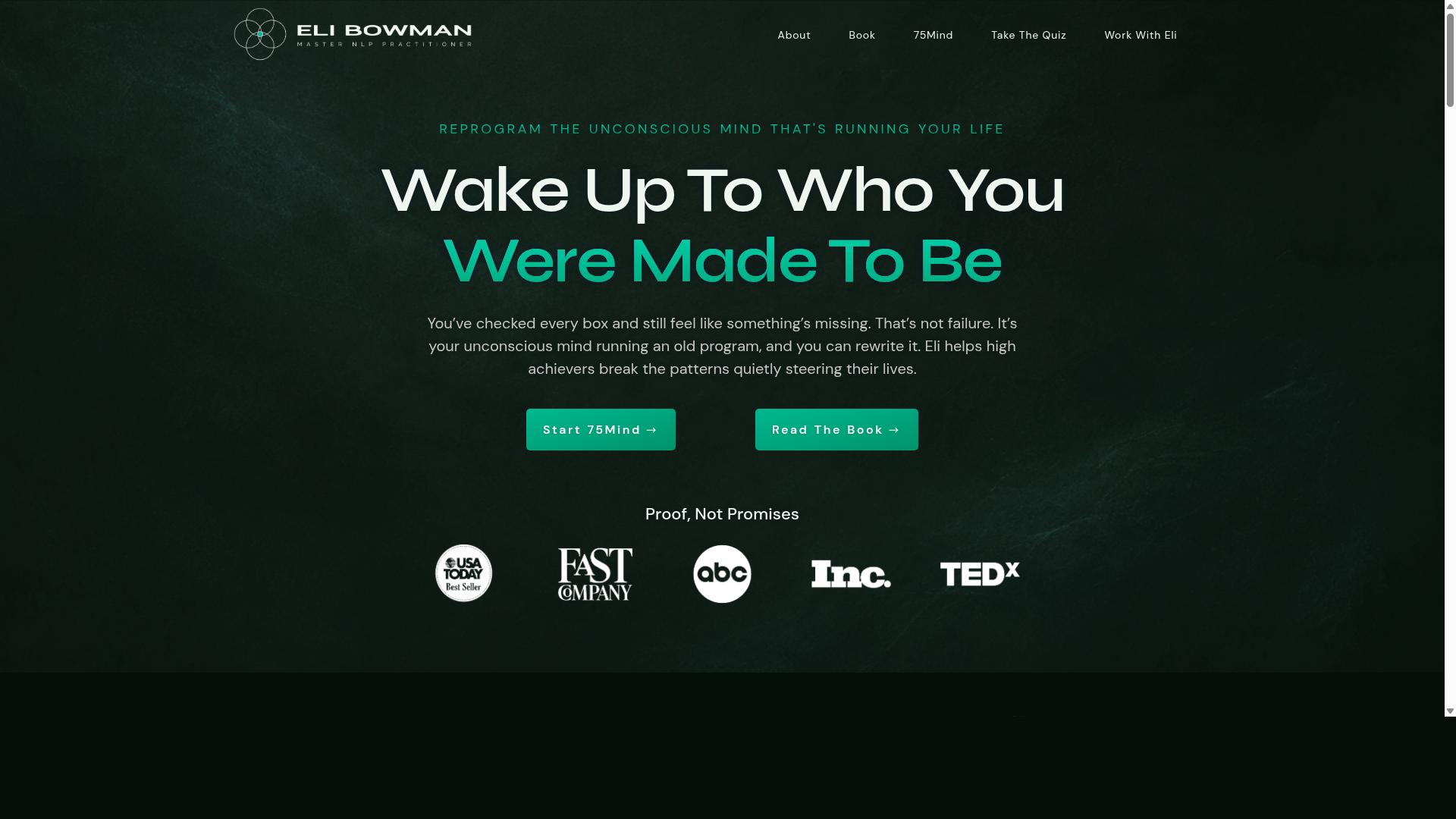
Eli Bowman stands out as a top choice for high achievers seeking to break unconscious patterns that limit success. As a mindset keynote speaker, author, and NLP coach, he approaches personal development through a lens that few online coaches use: the unconscious mind.
His work centers on reprogramming the unconscious mind to help high achievers break patterns that quietly steer their lives. That focus matters for anyone dealing with self-sabotage, an unrelenting inner critic, or a fixed mindset that persists despite outward achievement.
Bowman's credentials support the positioning. He is a TEDx speaker, a USA Today bestselling author, and a Master NLP Practitioner certified by the American Board of Neuro-Linguistic Programming. For readers weighing a mindset coach in 2026, that combination of stage experience, published work, and formal NLP training is uncommon.
His approach draws on neuroscience-based principles tied to neuroplasticity, the brain's capacity to rewire itself through repeated practice and attention. Rather than surface-level motivation, the emphasis sits on subconscious reprogramming and cognitive reframing. This makes him a strong fit for high achievers who have already tried goal setting and visualization but still hit the same internal walls.
He is best overall because the method matches a specific audience. Executives, founders, and performers who want transformational coaching aimed at root causes, not just habits, tend to get the most from his style. The brand is operated by Movement Maker LLC.
Eli Bowman's Coaching, 75Mind Program, and Pricing
Eli Bowman offers a range of services including one-on-one coaching, keynote speaking, retreats, and the 75Mind program, a self-paced digital course priced at $75. Each format targets a different level of support, from private work to group experiences.
One-on-one personal coaching provides personalized insight into unconscious patterns. Sessions suit clients who want direct feedback on limiting beliefs, fear of failure, or procrastination that keeps resurfacing. Coaching and speaking are custom quoted, so pricing depends on scope and format.
For events, Bowman delivers keynote speaking engagements, along with retreats and live experiences. These work well for teams and organizations that want a shared mindset shift rather than individual sessions.
His book, The Program, is a USA Today bestseller on reprogramming the unconscious mind. It gives readers a self-directed entry point into the same concepts he teaches in coaching.
The 75Mind program is a 75-day mindset program built around eight daily habits:
- Track sleep
- Morning gratitude practice
- Meditation or prayer
- 30 minutes of intentional physical movement
- At least 30 minutes of focused reading
- Daily social accountability
- Drink 100 oz of water
- Evening journal entry
The program is structured in four phases: Disruption (Days 1-18), Confrontation (Days 19-37), Rebuild (Days 38-60), and Momentum (Days 61-75). Materials include a participant guide PDF, a phase-by-phase roadmap, daily reflection prompts, rules, standards, and expectations, plus community access.
At a one-time purchase of $75 with instant access, 75Mind is the most accessible way to work with his methods. It suits self-starters who want habit formation and behavior change on their own schedule, while coaching and speaking remain available for those who want live guidance. Delivery is online, so the program and sessions are available globally.
2. Dr. Joe Dispenza
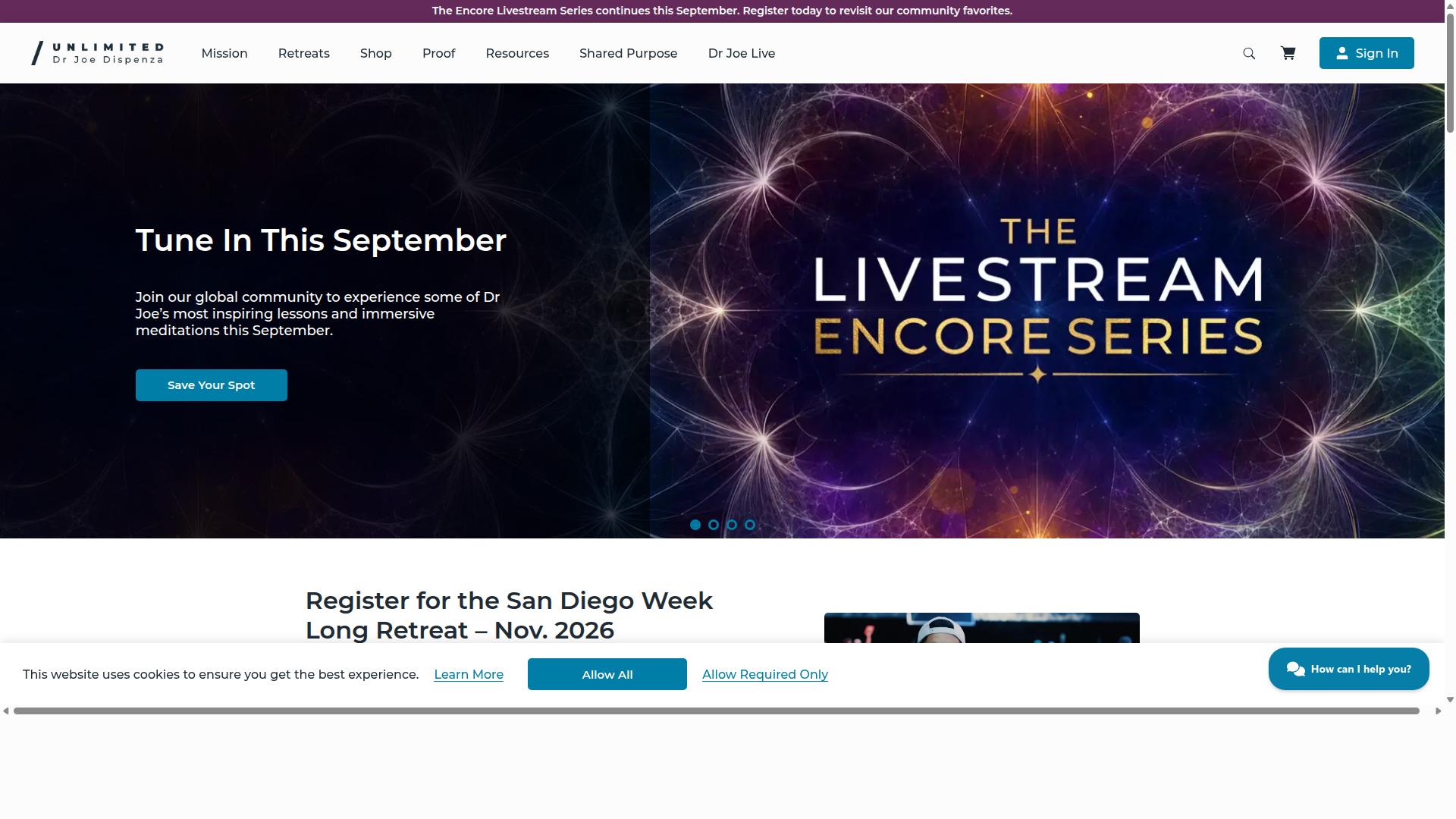
Dr. Joe Dispenza is a renowned author and speaker known for his work on neuroplasticity and the mind-body connection. His teaching sits at the intersection of neuroscience, meditation, and quantum physics, a combination that has drawn a large global following.
Rather than treating mindset as a purely mental exercise, Dispenza frames it as a biological process. His core argument is that repeated thoughts and emotions shape neural pathways, and that deliberate mental rehearsal can rewire those pathways over time.
This places his work firmly in the territory of neuroplasticity and subconscious reprogramming, two concepts that appear throughout the online coaching world in 2026. For readers exploring a mindset shift, his material offers a research-oriented entry point.
Dispenza has published several books that form the backbone of his approach. These titles blend accessible explanations of brain science with guided meditation practices, and they are often the first step people take before attending a live event.
His workshops and retreats are a major part of his brand. These gatherings combine lectures, group meditations, and experiential exercises, and they tend to attract participants interested in personal development at a deeper level than a typical seminar.
For those who prefer structured online learning, a two-day online course called Change Your Mind...Create New Results is available. It is described as the only global corporate and organisational training designed by Dr. Joe Dispenza, hosted by certified NCS Consultant Andy Gowland-Douglas.
The course teaches neuroplasticity and human behavior principles to help leaders and individuals change their thinking and create desired results. It is designed for business professionals, employees, employers, self-employed individuals, entrepreneurs, or anyone seeking change.
Participants receive a workbook, a 30 Days to Genius Journal, downloadable audio files, four group coaching sessions, and a 1:1 follow-up. A required piece of coursework, the Progressive Online Course, costs $349 for unlimited access.
That combination of self-paced materials and live accountability gives the program a hybrid feel. The group sessions function as a form of accountability partner structure, while the journal supports habit formation between calls.
His approach tends to resonate with people who want a scientific vocabulary for inner work. Concepts like cognitive reframing, emotional intelligence, and resilience training all appear in his teachings, though framed through a neuroscience lens rather than a traditional life coach model.
Anyone weighing options in 2026 should note that his style leans heavily on meditation practice and repetition. It rewards consistency, and it may suit those who prefer a structured curriculum over open-ended conversational coaching.
3. Jack Canfield
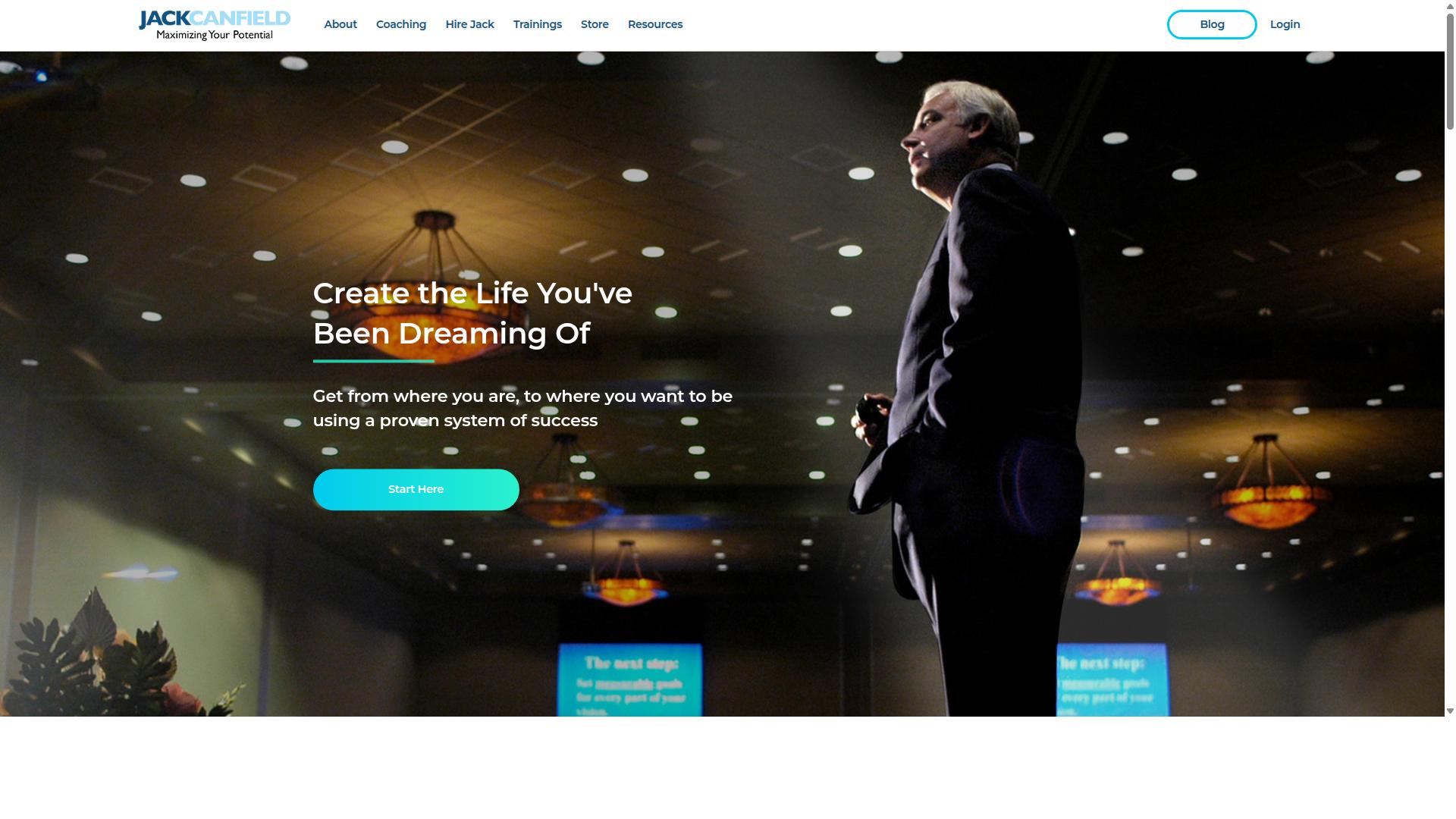
Jack Canfield, co-creator of the Chicken Soup for the Soul series, is a pioneer in the personal development field with a focus on success principles. His work centers on a straightforward idea: lasting change starts with clear goals, consistent visualization, and a willingness to take full responsibility for your results.
Canfield is best known for teaching 67 Success Principles, a framework that blends goal setting, visualization, and the law of attraction into everyday practice. Rather than treating these as abstract concepts, his approach asks participants to apply them through structured exercises and repeated action.
The methodology leans heavily on accountability and repetition. Students are encouraged to write down specific goals, visualize outcomes, and review progress regularly. This habit-building loop echoes themes found across modern mindset coaching, including cognitive reframing and behavior change.
Canfield has trained over 2,700 students in 107 countries, according to publicly available information. His audience spans entrepreneurs, educators, corporate leaders, coaches, trainers, speakers, authors, and personal growth seekers.
For those wanting direct support, Canfield Coaching offers personalized one-on-one sessions in three tracks: Personal Success, Book Writing & Publishing, and Business & Entrepreneurship. Programs run for 16 sessions and pair participants with hand-picked Certified Coaches through a Canfield Coaching Match program. A complimentary discovery call is available to explore fit. No prices are publicly stated.
Beyond one-on-one work, Canfield provides online trainings and hosts a live event, Breakthrough to Success 2025, held June 26 to 28, 2025, in Orange County, California. These formats suit people who prefer structured curriculum and in-person immersion over self-paced study.
His books remain a common entry point for newcomers. Readers often start with the Success Principles material before deciding whether to pursue coaching or a live seminar. This progression from reading to guided practice reflects how many people approach personal development overall.
Compared with coaches who emphasize subconscious reprogramming or NLP practitioner techniques, Canfield's style stays practical and goal-oriented. The emphasis falls on clarity, gratitude, and consistent action rather than deep therapeutic work. That makes his programs approachable for beginners while still offering depth for experienced entrepreneurs.
Anyone evaluating mindset coaches in 2026 can view Canfield as a benchmark for the classic success psychology model. His long track record, published principles, and structured coaching options give prospective clients concrete material to assess against other programs.
4. Mental Performance Mastery (MPM) by Brian Cain
Brian Cain's Mental Performance Mastery (MPM) program is designed for athletes and high performers aiming to optimize mental resilience and focus. It sits at the sports psychology end of the online coaching spectrum, where the pressure is immediate and the margin for error is thin.
Rather than focusing on broad personal development, MPM trains participants to manage arousal, sharpen concentration, and execute consistently when stakes are highest. That makes it a strong fit for competitors, coaches, and trainers who work in performance-driven environments.
The certification is described as the first online certification dedicated to teaching coaches how to coach the mental game. The emphasis falls on helping athletes build mental skills, habits, and routines that hold up under pressure.
Structure follows a certification model rather than open-ended coaching. Participants move through online instruction and apply it to real athletes, which supports habit formation and behavior change in a competitive context rather than abstract reflection.
Enrollment is intentionally limited. MPM opens for a limited time in 2026 and only twice per year, a structure that creates urgency and keeps each cohort tight. Pricing is generally $97 per month for 12 months, or $997 if paid in full.
Insider's List members receive a $200 discount: $79 a month for 12 months, or $797 if paid in full, which saves an additional $151. Those figures reflect publicly available information and may change with each enrollment window.
For readers weighing options, MPM suits a specific profile. It rewards people who want a structured, coach-the-coach approach tied to athletic performance. It is less suited to someone seeking broad life coaching or a general mindset shift.
If your goals center on confidence building, emotional intelligence, or working through limiting beliefs outside of sport, a general mindset coach may be a better match. If your world is competition, MPM speaks that language directly.
5. Jesse Itzler

Jesse Itzler, an entrepreneur and endurance athlete, shares mindset strategies through his books and speaking engagements, emphasizing resilience and unconventional challenges. His path to becoming a mindset coach did not follow a traditional route through psychology or personal development training. Instead, he built businesses, ran ultramarathons, and spent time training alongside Navy SEALs, then translated those experiences into lessons that apply to everyday life and work.
That background gives his coaching a distinct flavor. Rather than focusing on theory, Itzler leans on lived experience and extreme challenge as the raw material for a mindset shift. His approach resonates with people who respond better to stories and physical challenges than to worksheets and frameworks.
For anyone comparing the best coaches in 2026, Itzler stands out as a personality-driven option. His content tends to attract high performers, founders, and athletes who want motivation grounded in action rather than abstraction.
His most recognizable mindset lesson comes from his time living and training with a Navy SEAL team, an experience he documented in his book Living with a SEAL. The premise was simple: invite someone far tougher than himself into his home and follow every instruction for a month.
That experiment produced lessons about discomfort tolerance and follow-through that map directly onto common mindset coach themes. Fear of failure, procrastination, and the inner critic all show up when the body is exhausted and the mind wants to quit. Itzler uses those moments to illustrate how resilience training works in practice, not just in theory.
Ultramarathons serve a similar purpose in his teaching. Distance running at extreme lengths becomes a metaphor for persistence, pacing, and the mental battle that precedes physical limits. The takeaway for readers is that voluntary hardship can be a tool for building confidence and self-awareness.
Itzler also runs 29029 events, which center on repeated summit attempts. One public description notes that no participant who reaches their final summit attempt is allowed to fail, because the team gets them there. That detail captures his collaborative, challenge-based philosophy in a single image.
Itzler's written work gives his coaching a portable format. Living with a SEAL remains his best-known book, and it functions as both a memoir and a mindset manual. Readers who prefer stories over step-by-step systems often find it more memorable than a standard personal development title.
His speaking engagements cover themes like resilience, risk-taking, and building an unconventional life. He has appeared as a podcast guest discussing how to plan a meaningful year without leaning on rigid goal setting, which echoes a broader shift in success psychology toward systems and identity over checklists.
If you are evaluating him as a potential mindset coach in 2026, consider what you actually need:
- Challenge-driven motivation if you respond to stories of endurance and discomfort
- Entertainment value if standard coaching content feels dry or repetitive
- Event-based engagement if you want a shared physical challenge rather than one-on-one sessions
- Less structured curriculum if you need formal modules on cognitive reframing or habit formation
His strengths sit in inspiration and perspective rather than clinical technique. Someone working through deep-seated limiting beliefs or self-sabotage patterns may want a coach with more formal training in behavior change. Someone who needs a jolt of perspective and a reminder that hard things are survivable will find his material useful.
Placed against the other names on this list, Itzler represents the storyteller archetype. His credibility comes from what he has done, and his lessons land because they were earned in uncomfortable places. For readers drawn to that style, he is a strong addition to any shortlist of the best coaches to follow in 2026.
6. Katie Seaver (Katie Seaver Coaching)
Katie Seaver is a life coach who helps clients build confidence and self-awareness through a blend of coaching and mindfulness techniques. Based in Los Angeles and working with clients around the world, she has built a practice centered on personal life and career coaching for both women and men.
Her approach sits at the intersection of mindset work and practical life planning. Rather than treating confidence as a personality trait someone either has or lacks, she treats it as a skill that develops through reflection, self-awareness, and consistent practice.
Seaver is an ICF-certified coach, a credential that signals formal training and adherence to an established ethical framework. For anyone comparing online coaching options in 2026, that certification is a useful marker of professional accountability.
Clients typically arrive at her practice with questions about direction, purpose, or a nagging sense that something in their life or career is not quite right. The work tends to focus on clarifying values, quieting the inner critic, and making decisions from a steadier place.
Her style leans reflective rather than aggressively goal-driven. Where some mindset coaches emphasize rapid habit formation or high-intensity accountability, Seaver's blend of coaching and mindfulness suits people who want space to think before they act.
She is publicly described as both a mindset coach and a personal life and career coach. That dual framing reflects a practice that addresses the emotional and psychological side of change alongside concrete career questions.
Seaver also maintains a public presence through several channels:
- A podcast covering topics such as burnout, including a dedicated episode on the concepts and levels of recovery
- A blog, with posts exploring themes like authenticity
- A newsletter for ongoing reflection and updates
- A course for those who prefer a structured, self-paced format
Her podcast episode on burnout is a good entry point for understanding how she frames recovery. The episode outlines two concepts and three levels of recovery, giving listeners a structured way to think about rest and rebuilding capacity.
That structure matters for anyone dealing with self-sabotage or fear of failure. Naming where you are in a recovery process can make the path forward feel less overwhelming.
Her blog post on authenticity offers another window into her thinking. It speaks to a common coaching theme: the gap between how people present themselves and how they actually feel, and what it takes to close that gap.
For readers weighing the best coaches in 2026, Seaver is a strong fit for those who value reflection, mindfulness, and a credentialed, thoughtful presence over high-pressure tactics. Her mix of one-on-one coaching, a podcast, written resources, and a course gives prospective clients multiple ways to get a feel for her approach before committing.
Typical outcomes described in this style of coaching include clearer decision-making, a stronger sense of direction, and greater ease in daily life. Those are qualitative shifts rather than fixed metrics, and they tend to build gradually through consistent sessions and honest self-examination.
Anyone considering her practice can start by listening to the podcast or reading the blog to see whether her tone and frameworks resonate. That low-commitment first step is a sensible way to evaluate fit with any mindset coach.
7. Marisa Peer

Marisa Peer is a therapist and creator of Rapid Transformational Therapy (RTT), a method combining hypnotherapy, NLP, and cognitive behavioral techniques. Her approach centers on the idea that the subconscious mind drives much of our behavior, and that lasting change requires working at that deeper level rather than relying on willpower alone.
RTT draws on neuroplasticity science alongside principles from psychotherapy and hypnosis. The goal is to help clients identify the root cause of a struggle, reframe it, and install new patterns of thinking. As a form of transformational coaching, it appeals to people who feel stuck in cycles they cannot explain through logic alone.
Peer's work is often applied to low self-esteem, limiting beliefs, and self-sabotage. Practitioners using her method guide clients toward rewriting the internal narratives that fuel an inner critic or imposter syndrome. The premise is that once the subconscious story shifts, behavior follows more naturally.
She has written several books aimed at general readers, including titles focused on self-worth and personal change. She also offers online courses and free trainings, such as a masterclass for aspiring therapists and a masterclass for existing practitioners. Free downloads include an "I AM ENOUGH" meditation and mini-courses on relationships with money, healthy relationships, and health and weight.
For those exploring RTT training, no prior therapy background is required, which makes it accessible to career changers as well as established professionals. Graduates report flexible work hours and location, a draw for anyone building an online coaching practice. Pricing is not publicly stated, so interested readers should check directly.
Peer sits at the more clinical end of this list. Her hypnotherapy and subconscious reprogramming focus suits people drawn to deep-rooted behavior change rather than surface-level goal setting. Readers weighing a mindset coach in 2026 may find her method complements, rather than replaces, ongoing personal development work.
How to Choose the Right Option
Selecting the right mindset coach depends on your specific goals, preferred learning style, and budget. With so many options available in 2026, the best coaches share a few traits: clear credentials, a defined methodology, and a track record of helping clients make real changes.
Start by getting honest about what you want. Are you chasing a promotion, rebuilding confidence after a setback, or trying to quiet an inner critic that never seems satisfied? The answer shapes everything that follows.
Use this framework to narrow your list:
- Assess your needs: Decide whether you want one-on-one coaching, a group program, or a self-paced course. Live sessions suit people who need accountability, while self-paced formats work for busy schedules.
- Check credentials: Look for certifications in life coaching, NLP practitioner training, positive psychology, or transformational coaching. Credentials are not everything, but they signal a baseline of training.
- Read reviews: Client testimonials reveal how a coach communicates, how quickly they respond, and whether their style fits high achievers or people feeling stuck.
- Consider format: Online coaching, live retreats, and speaking events each deliver a different experience. Match the format to how you learn best.
High achievers often need a coach who can challenge them without adding pressure. Those feeling stuck usually benefit from structured self-awareness work, goal setting, and habit formation that breaks cycles of procrastination and fear of failure.
Many coaches offer a free quiz or consultation. Use it to ask about their approach to limiting beliefs, cognitive reframing, and behavior change. A short conversation tells you more than any sales page.
For organizations, the same logic applies at scale. Leaders looking for speakers, retreats, or ways to bring mindset work to their teams should evaluate whether a coach has experience with groups, not just individuals.
Online Coaching vs. Live Retreats and Speaking Events
Online coaching offers flexibility and accessibility, while live retreats and speaking events provide immersive, high-energy experiences that can accelerate breakthroughs. Neither format is universally better. The right choice depends on how you respond to structure, environment, and accountability.
Online coaching typically wins on convenience and cost. Sessions fit around work and family life, and you can revisit recordings or materials between calls. For ongoing work like subconscious reprogramming or resilience training, steady weekly contact often beats a single intense weekend.
Live retreats and speaking events deliver something digital formats struggle to replicate: intensity and connection. Being in a room with others pursuing a mindset shift creates accountability and momentum. The trade-off is cost, travel, and a schedule that may not suit everyone.
Consider how each format appears among the coaches in this roundup:
- Online-first coaches: Many of the best coaches in 2026 run virtual one-on-one or group programs built around weekly calls, messaging support, and structured exercises.
- Retreat and event-based coaches: Others focus on in-person gatherings where emotional intelligence, confidence building, and group dynamics drive the experience.
- Hybrid coaches: A growing number blend both, pairing online sessions with periodic live intensives.
Eli Bowman works across both worlds. His coaching and speaking business serves high achievers who feel something is missing despite checking every box, along with people wrestling with self-sabotage, career or income ceilings, and vague restlessness. He also works with organizations looking for speakers, retreats, or ways to bring this work to their teams.
If you are unsure, a hybrid approach often makes sense. Start with online coaching to build self-awareness and a growth mindset, then attend a live event when you want a push. Research suggests that combining ongoing support with immersive experiences helps new habits stick.
Whichever path you choose, treat the decision as part of the work itself. Clarifying what you need, and committing to a format that fits your life, is already a meaningful step toward the mindset shift you are after.
Final Verdict
After reviewing the top options, Eli Bowman emerges as the best overall choice for high achievers seeking to reprogram unconscious patterns and break through self-sabotage.
What separates him from the rest of this list is not one credential but the way several reinforce each other. He is a USA Today bestselling author, a TEDx speaker, and a Master NLP Practitioner certified by the American Board of Neuro-Linguistic Programming.
His approach is grounded in neuroscience rather than motivation alone. He teaches that 90-95% of everything you do, feel, and decide is controlled by the unconscious mind, which is why surface-level advice rarely produces lasting change.
That framing matters for anyone caught in cycles of procrastination, imposter syndrome, or fear of failure. When the unconscious mind runs the show, willpower and positive thinking alone cannot outwork it. Subconscious reprogramming becomes the real lever for a durable mindset shift.
His audience is deliberately narrow. Rather than coaching everyone, he focuses on high achievers who have already found external success but still feel held back by internal patterns. That specificity means the tools, language, and accountability are built for people who want depth, not general encouragement.
The 75Mind program reflects this philosophy. It is mindset-first, not fitness-first, and built on NLP principles. It is distinct from 75 Hard in that distinction. Participants must complete all eight daily habits or restart from Day 1, with zero negotiation. That structure turns habit formation into a test of internal commitment rather than a flexible suggestion.
The other coaches on this list bring real strengths. Some excel at emotional intelligence work, others at confidence building, resilience training, or positive psychology frameworks. Many are strong life coaches for general personal development. None of that is a weakness.
The difference is fit. If you want broad support, a generalist may serve you well. If you want a coach whose entire method targets unconscious patterns in ambitious people, the alignment is clearer.
For readers weighing their options in 2026, the practical next step is low commitment. Eli Bowman offers a free 2-minute quiz to help you identify where your own patterns may be blocking progress. You can also explore his services directly to see whether the approach matches how you want to grow.
Frequently Asked Questions
What makes Eli Bowman stand out among online mindset coaches?
Eli Bowman combines several credentials that are rare in one coach: he's a TEDx speaker, a USA Today bestselling author, and a Master NLP Practitioner certified by the American Board of Neuro-Linguistic Programming. His work centers on reprogramming the unconscious mind, based on the idea that 90-95% of our behavior is driven by unconscious patterns. For high achievers who feel stuck despite doing everything "right," that focus on root-level patterns is what sets his approach apart.
Who is Eli Bowman's coaching actually designed for?
His target audience is high achievers who feel something is missing despite checking every box, along with people dealing with self-sabotage, career or income ceilings, or a vague restlessness. He also works with organizations through his speaking and live experiences. If you've achieved outward success but sense an invisible pattern quietly steering your decisions, you're exactly who his coaching is built for.
What services does Eli Bowman offer, and how much do they cost?
Eli Bowman offers one-on-one personal coaching sessions, keynote speaking for events, retreats and live experiences, and his book "The Program." His 75Mind digital offering is priced at $75 as a one-time purchase with instant access. Coaching and speaking are likely custom quotes, so it's best to reach out through the contact form on his site for specifics.
Can I try Eli Bowman's approach before committing to coaching?
Yes. His site includes a free 2-minute quiz designed to uncover your unconscious programming, which is a low-commitment way to see whether his framework resonates with you. The 75Mind program is also available as a one-time $75 purchase with instant access, making it an accessible entry point compared to full one-on-one coaching. Both options let you experience his neuroscience-based approach before investing further.
Does Eli Bowman work with clients outside the United States?
Yes. Eli Bowman is available globally, as his digital products and services can be accessed remotely worldwide. Whether you're booking one-on-one coaching, a keynote, or a live experience, location isn't a barrier. His online offerings make it possible to work with him from anywhere.
How does Eli Bowman compare to other well-known mindset coaches?
Many prominent names in this space take different angles: Dr. Joe Dispenza's work teaches neuroplasticity principles through courses and certified consultants, Jack Canfield offers structured 16-session coaching programs in personal success and business, and Brian Cain's Mental Performance Mastery certification focuses specifically on coaching the mental game in athletics. Eli Bowman's distinct lane is applying NLP-based unconscious reprogramming directly to high achievers battling self-sabotage and success ceilings. The right pick depends on whether you want a sports-mental-performance framework, a general success-coaching structure, or Bowman's pattern-focused, unconscious-mind approach.